
Posing, like Poetry
Or, What the Two May Have in Common

Finding an interesting pose for artists isn’t rocket science. But it does require an ability to see one’s self from the outside, to imagine what the artists are seeing.
The same is true for returning to a pose after a break. That’s also not mentally difficult. But it requires an ability to remember the spirit of the pose, a sense of how it felt that ‘clicks’ when your body returns to where it had been.
In that way, posing and returning to a pose are kinda like writing a poem.
Let me explain: the main trick for a model to get back into her pose is to have marked her nose. Weird, right? But actually, it’s a glance she takes before her first break.
The trick is this: the model closes one eye and positions the tip of her nose over a memorable (and immovable) object. After break, she can check the position of her head by looking down her nose and placing it back over the object. Ta da.
This trick locks in the position of the head which is amazingly easy to get wrong. I’ll wait while you see how far your head can move up and down, left and right, while keeping your eyes on a lamp. You can draw entire circles, right?
Any shift in the head’s position—especially a head in a studio lit with spotlights—changes the angles and planes and shadows on the face. And shadows are more important in an art studio than anywhere else on earth.
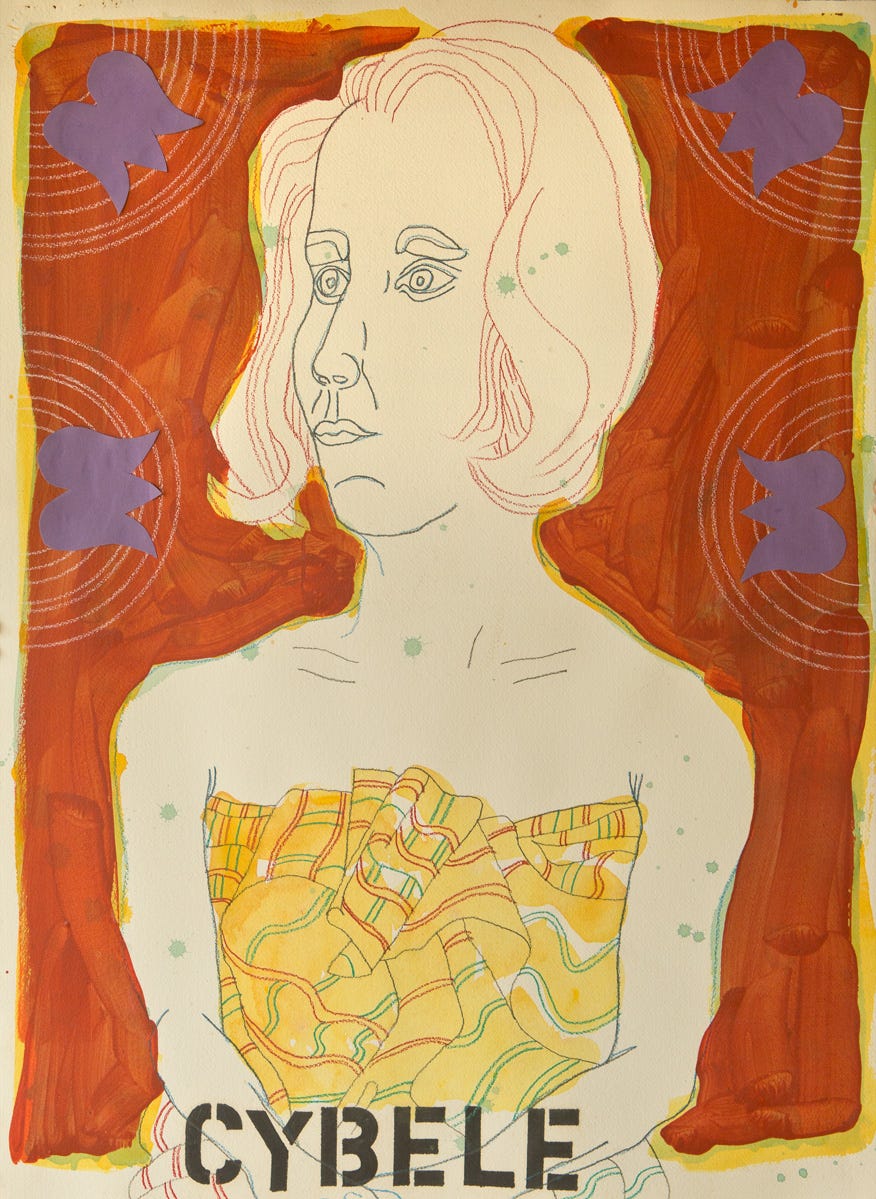
In some ways, returning to a pose while modeling is like revising a poem. The poet must be clear on what imagery she’s aiming at, what she’s focusing her poem on, and what she’s trying to say.
In a writing workshop, if you ask us a poet these questions, and he can’t explain what he’s trying to say, chances are he hasn’t worked on the poem enough. Or he might not have thought enough about what he’s trying to say—his message.
Getting this clarity can be a matter of revision. The message usually isn’t clear on the first draft. Phillip Shabazz once told me, “The mess can be the journey.”
The message may only become clear while the poet’s out walking, thinking about the poem, mulling over its images, what they seem to want to add up to mean.
Once the message gels, like placing the tip of the nose over that memorable object, the poet can come back to the poem and find her place. The time thinking, revising, and refining the poem’s position locks in the sightline, the planes, and shadows.
Poetry may be where shadows play as important a role as they do in a studio.
When the poet’s focus is locked in, like with a portrait, the poem takes on a new life, a meaning beyond a pile of words—the same way a good painting takes on a life beyond the frame. The best art, the best poems, vibrate with this double meaning
In other news, a big-deal thing happened quietly the other day—my debut chapbook of poems arrived in the mail. Bear with me while I work up the nerve to open the box.
You can order a copy below, and that slim book of poems will get to you before you know it. When it arrives, you can read about Picasso’s most famous models and my own modeling jobs.
As ever, thanks so much for following along on my journey into print.
Click to order The Higher Call
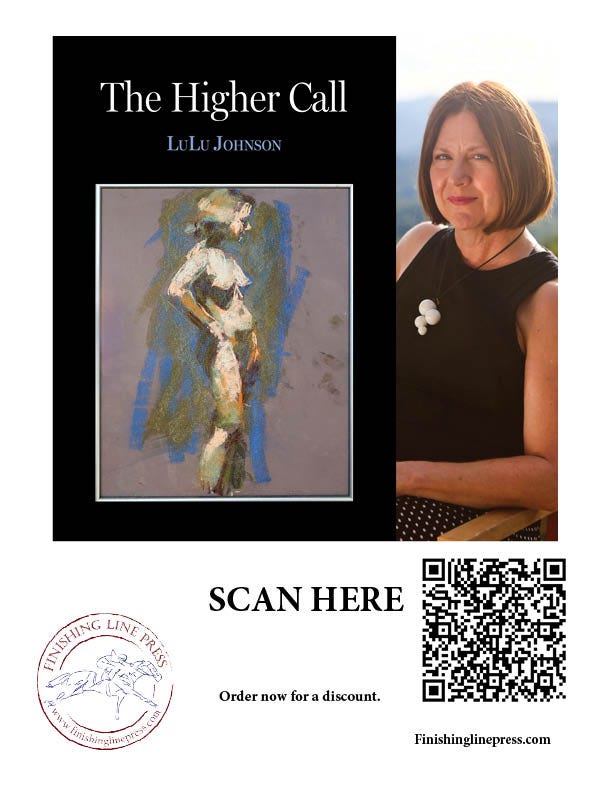
Got your book today! Started reading today, once I got passed the painting on the cover,
HERE!!!!