
All Eyes on Me
Or, How I Became an Artist Model

The easy answer is that I needed money. The more complicated one is that I saw a way to use my degree in Art History while earning my MFA in poetry.
That didn’t turn out to be true. I thought my knowledge of art history would inspire my poses in the studio, but I quickly realized there are too many variables to make that work—like a lack of fancy furniture and pretty props.
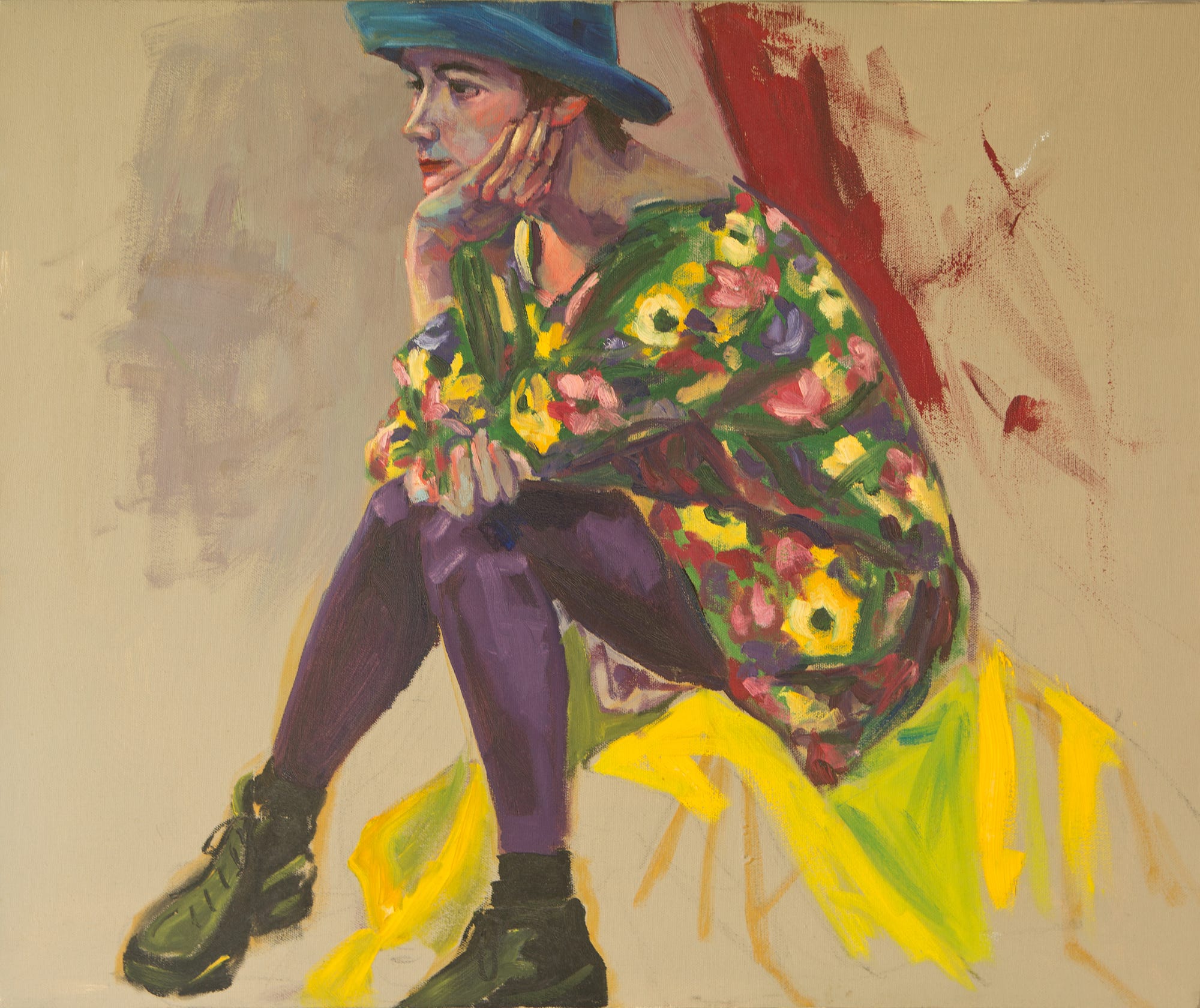
Rather than exact poses, my knowledge of art history helped me realize that on the model stand, I took a spot on the timeline of models, of muses. My degree taught me how far back that went in time, and it’s a long line.
The class that most helped me become a model was a life drawing class. After getting laid off from my gallery job, I went back to school to become a graphic designer. The requirements for that back then included taking foundational art classes.
I lasted long enough to take figure drawing classes and figuring out I don’t like to draw. More importantly, the drawing classes taught me that when an artist looks at a model, it’s not sex behind the gaze. It’s math.
Figure drawing requires measuring—of angles and shapes, of body parts and empty space. That’s why artists hold a pencil toward the model, then down to their page—to check the angles and measurements. Knowing what went on inside an artist’s head while drawing made it somewhat easier to get up on the model stand myself.
All it took to get started was to speak to one of my art teachers who gave me the name of a model. I called, and that model gave me the name of an instructor. I called, and that instructor gave me my first job, knowing it was my first job.
I’m no longer sure where that first class took place. What I remember is that the instructor was patient and understanding. Even so, she did not give me any hints or tips—oddly enough, modeling is a job one learns on the job.
I also remember the pause before lowering the robe the first time. There I stood on the stand in the middle of a roomful of strangers, all eyes on me. The instructor asked if I was ready, and I nodded. I lowered the robe and began a job I’ve done ever since.
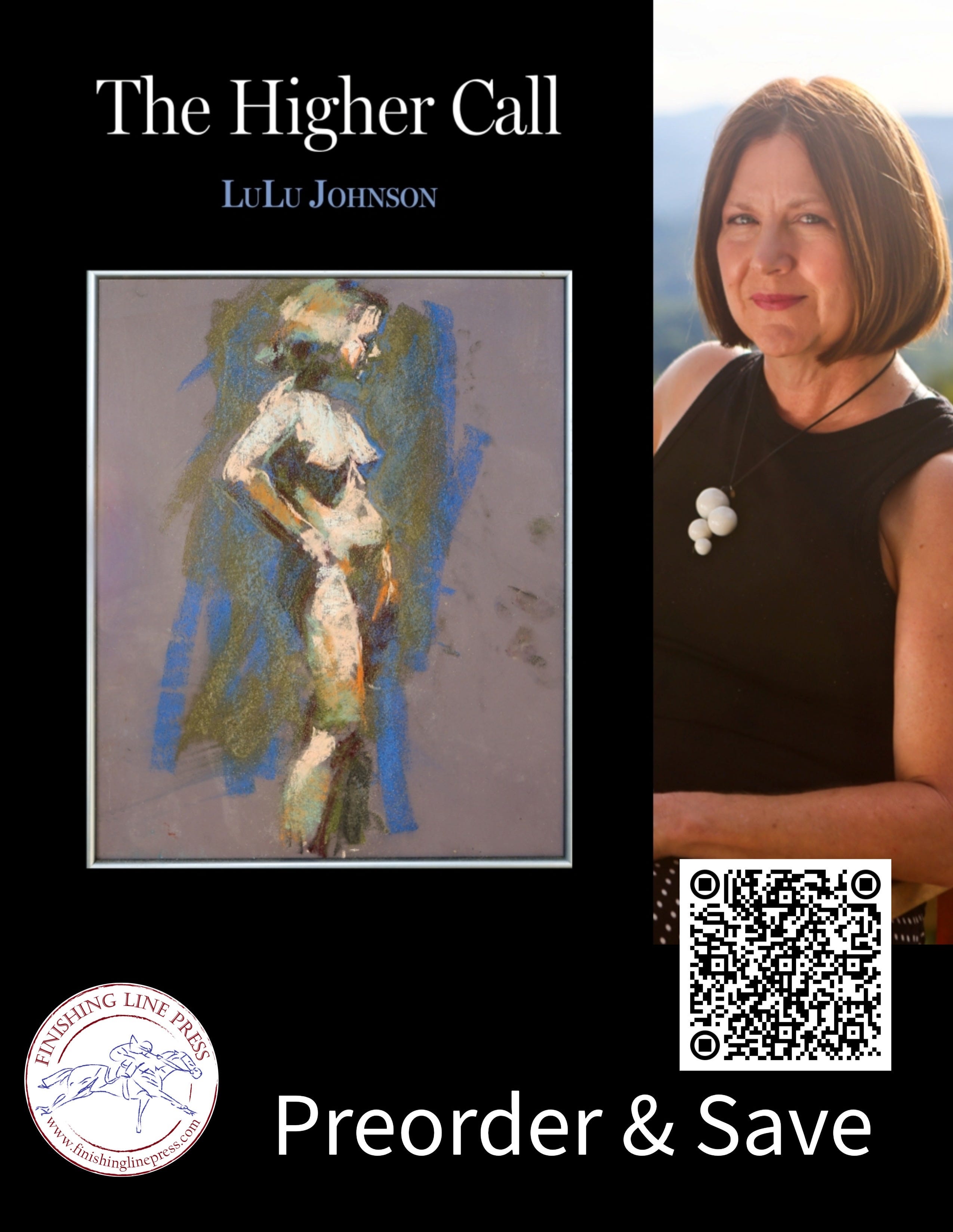
“Every Model’s Pep Talk” is a poem in my debut chapbook, The Higher Call, that discusses these aspects of the job—the giving over of one’s self “to eyes, chalk/ watercolor, gouache.” That’s what modeling holds for me, the sense that I’m in a moment that transcends time.
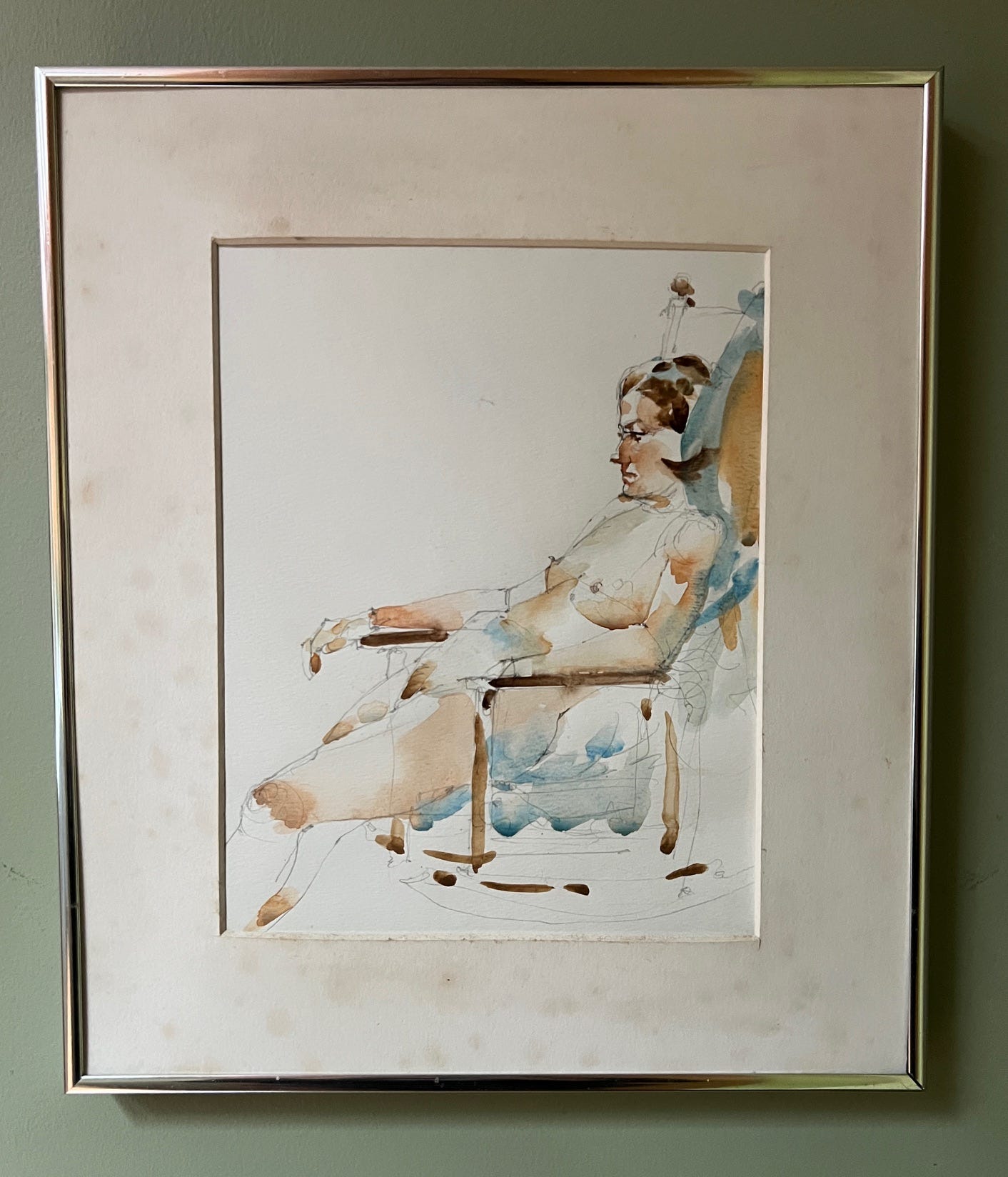
That transcendence also appears in my poems written from the point of view of Pablo Picasso’s most famous models—that they were with him in the studio, a storied spot, and that because of their time with him, these women live on in our museums and our memories.
That’s what art does, I think. It freezes a moment, a body, a face. Looking at a portrait, one transcends time to catch a glimpse of what was happening the moment that work of art was made.
Being on the model stand, being the body frozen in time, that’s a heady feeling.
Oddly, even though I modeled while earning my MFA in poetry, I did not write poems about modeling back then. My modeling poems were encouraged by Andrea Jurjević when she was my mentor through Middle Tennessee University’s Write program.
But I wish I had written about modeling back then. Those old poems would’ve done what a painting would have done—captured me in that moment. But better, a poem would contain names of students and venues, the particular ache of some poses and the joy of being surrounded by artists in a working studio. That’s a feeling I still love.
To read more about Picasso’s models and my own modeling jobs, hurry and buy a copy of my chapbook this week, won’t you? It’s the lowest price it will ever be, @$20—until June 12.
My crazy goal is to sell 12 copies in 5 days!
Click here to click where to purchase a copy: The Higher Call
If you’ve already placed an order, please consider sharing the link with your friends.
And if you haven’t order yet, please do order before June 12 to have the most positive impact on my journey into print.
As ever, thanks so much for your support.
Ordered this morning!